

Why Participation Doesn’t Always Mean Engagement…
I've lost count of how many meetings I've sat in with youth-facing professionals (educators, youth workers, community leaders) who are genuinely trying to figure out why young people seem... present but not really there.
The young people show up. They complete the task. They do what's asked. Box ticked.
But something's missing.
I think most of us who work with young people have felt it; the only way I can describe it is as a gap between participation and actual engagement. And honestly? It has taken us a lot of years and a stack of research to truly understand this distinction.
Participation is what happens when the system requires it. It's shaped by expectations, structures, and consequences. Young people participate because they're supposed to, not necessarily because they want to.
I remember as a teacher supporting a young person in my year level who was one of those students who had their hand in the air for every opportunity - speaking at assemblies, running fundraisers, and leadership roles. The kind of student you'd assume was deeply engaged. When I asked what motivated them, they were refreshingly honest and said something along the lines of: "The more I do, the more it helps with leadership positions and uni applications."
That answer has stuck with me.
Because this wasn't a disengaged young person gaming the system. This was a young person responding intelligently to the incentives we'd built into their world. They'd figured out what we, the adults, valued and how to deliver it.
The participation was working exactly as designed. But engagement? That's something else entirely.
Engagement is internal. It shows up when young people feel they have choice, when they're building competence, when there's a genuine connection. When something actually matters to them, not just to us.
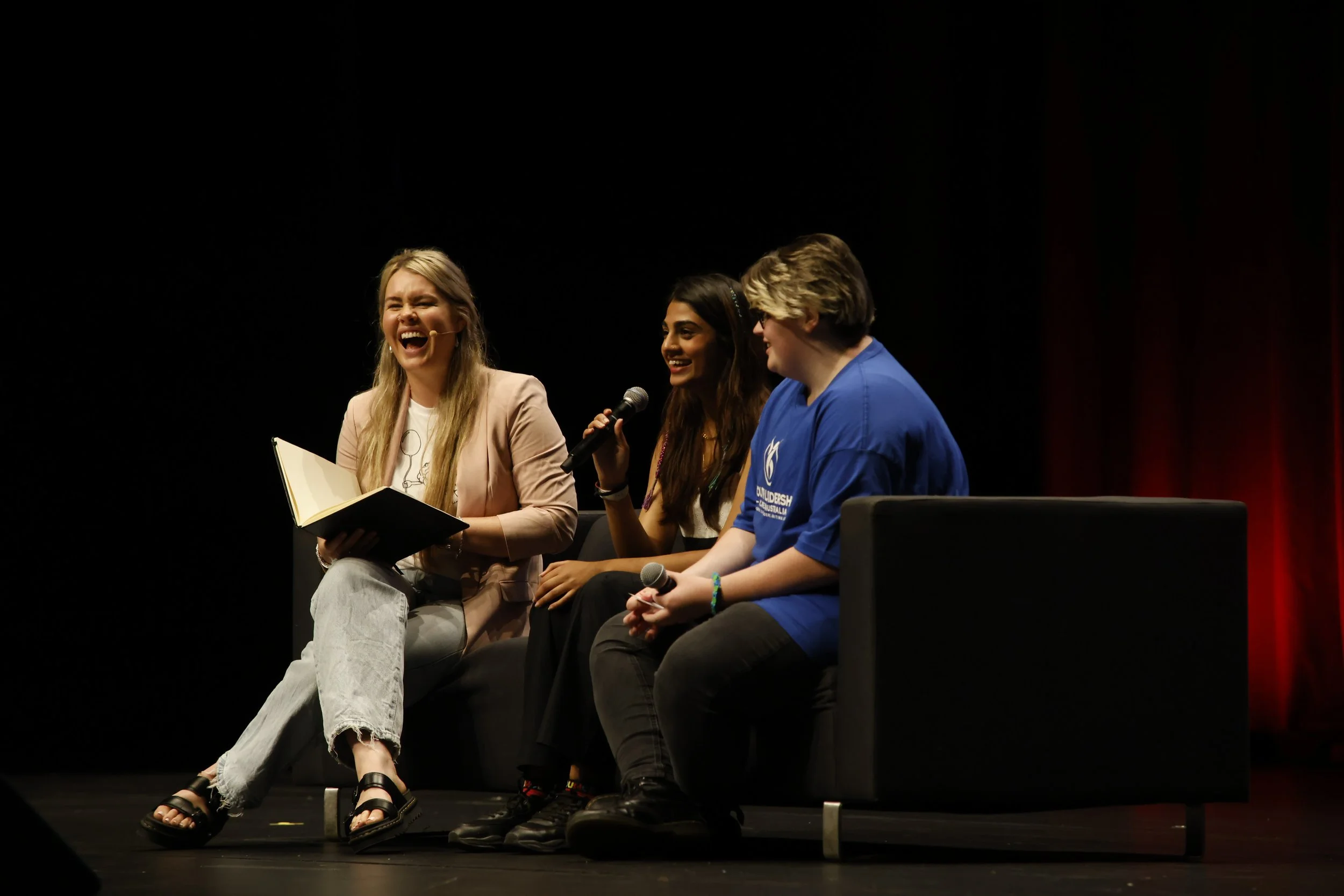
Engagement is internal. It shows up when young people feel they have choice, when they're building competence, when there's a genuine connection. When something actually matters to them, not just to us.
This distinction matters because we can easily mistake one for the other. A quiet room of students completing worksheets looks productive. But compliance can mask disengagement, especially for young people who've learned that keeping their head down is safer than speaking up.
What we’re noticing more and more in this work, through what we’re researching and what we’re hearing, is that young people are selective about where they invest their energy. They're constantly weighing up:
Does this actually matter to me?
Do I have any real say here?
Am I respected in this space?
Is it safe to be honest?
When the answers are no, they'll still participate. But the engagement disappears.
And what I find curious and so interesting is that this isn’t apathy. It's assessment. It's young people reading the room and responding accordingly.
The shift from participation to engagement doesn't come from asking young people to try harder. It comes from us creating different conditions. When our communication supports autonomy instead of control, builds competence instead of comparison, and fosters connection instead of compliance, that's when engagement becomes possible.
Heading into 2026, this feels urgent. Young people are dealing with more pressure and complexity than ever. We can still get participation; that's relatively easy. But engagement? That requires intention.
So the question isn't: How do I get them to participate?
It's: What conditions am I creating for engagement to actually emerge?
If this reflection resonates, we’re exploring these ideas in depth through our professional learning workshops focused on youth communication and understanding Gen Z. They’re designed to support practical, evidence-informed approaches that move beyond compliance and towards genuine engagement.
